Play is how young children learn, and it needs far less equipment than the toy aisle suggests. A handful of well-chosen toys, a few household favourites and your attention will take you a very long way.
For babies (0–12 months)
In the first year, play is mostly about senses and connection. Short, happy bursts through the day beat one long session.
- Tummy time on a firm mat, a few minutes at a time, with a toy or your face just in view.
- Peekaboo, gentle tickles and songs — repetition is the whole point.
- Rattles, teethers and soft blocks to grasp, shake and safely mouth.
- Board books with bold pictures; name what you see and let them pat the pages.
For toddlers (1–3 years)
Toddlers want to move, copy and test. Offer activities that let them do all three:
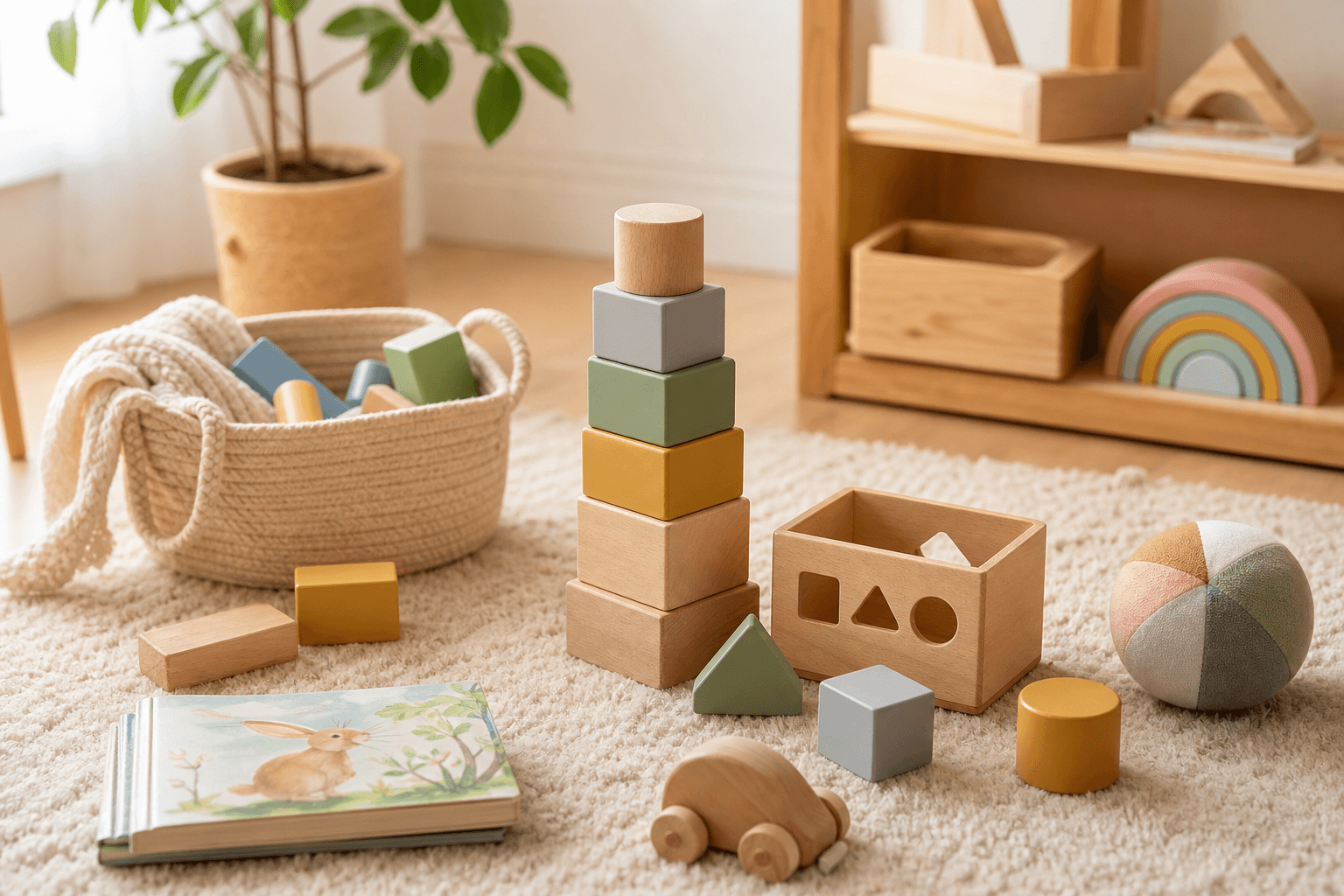
- Stacking cups or blocks — build towers together and let them enjoy the demolition.
- Simple sorting: shapes into a sorter, or spoons into one bowl and cups into another.
- Pretend play with a toy phone, a pot and spoon, or a dolly to feed.
- Songs with actions, and plenty of safe space to climb, push and pull.
Keeping it low-fuss
Rotate a small set of toys rather than putting everything out at once — old favourites feel new again after a week away. Follow your child's lead, join in for a few minutes, then let them potter while you get on with your own tasks nearby. That balance of together and independent play is where confidence grows.
Browse trusted essentials chosen with real family days in mind.